
OT-ETC OCCUPATIONAL THERAPY
OUR SERVICES
Every child is unique. Our therapists create individualized intervention plans using evidence-informed, play-based approaches to support meaningful participation in everyday life.
Explore below to learn more about our areas of expertise, specialized programs, and therapeutic approaches.

Areas of Expertise
We support children with a wide variety of developmental needs, including:

Sensory Processing & Regulation

Emotional & Behavioral Regulation

Feeding & Oral Motor Skills

Fine Motor & Handwriting

Visual Motor & Perceptual Skills

Gross Motor Skills & Coordination

Motor Planning (Praxis)

Executive Functioning

Social Participation

Activities of Daily Living
(dressing, grooming, feeding, toileting)
Specialized Programs
Our therapists have advanced training in a variety of evidence-based programs that may be incorporated into your child’s individualized intervention plan.
Our feeding therapy approaches include:
- SOS (Sequential Oral Sensory) Approach to Feeding. Sosapproachtofeeding.com
- AEIOU Approach to Feeding. www.foodsmartkids.com
- Get Permission Approach to Feeding. Getpermissioninstitute.com
- Beckman Oral Motor Protocol. Beckmanoralmotor.com
- Therapy is individualized to meet each child’s unique needs and may include oral motor activities using tools such as Z-Vibes®, NUK brushes, and other specialized equipment to support oral awareness, coordination, and feeding skills. Sessions focus on developing positive mealtime experiences, expanding food acceptance, and building confidence with eating and drinking. Caregivers play an important role in the therapy process, with goals developed collaboratively between the child, family, and therapist. Practice in the clinic is supported by home recommendations, and families are encouraged to bring familiar foods, cups, plates, and utensils to promote success. For children with sensory sensitivities, activities such as messy play may also be incorporated to increase comfort with different textures and food experiences.
This structured handwriting program uses kinesthetic, tactile, and motor-based learning activities to teach letter formation engagingly and enjoyably. The program begins with the manipulation of lines and curves using wooden pieces to create shapes and letters, then progresses to activities involving sponges, water, chalkboards, and other hands-on manipulatives to support handwriting development. www.lwtears.com
A self-regulation program that helps children learn to recognize and manage their levels of alertness, attention, and energy throughout the day. Using the familiar concept of an “engine,” children learn whether their bodies are running too high, too low, or just right. Alertprogram.com
A self-regulation program that helps children recognize, understand, and manage their emotions, energy levels, and behaviors. Using a simple color-coded system, children learn to identify how they are feeling and develop strategies to regulate their bodies and emotions across different environments. Zonesofregulation.com
An evidence-based approach that helps children develop the social, emotional, and cognitive skills needed to successfully interact with others. Through structured activities, discussion, and play-based experiences, children learn to understand social situations, recognize the thoughts and feelings of others, and develop skills such as perspective taking, flexible thinking, problem-solving, conversation, and self-regulation. www.socialthinking.com
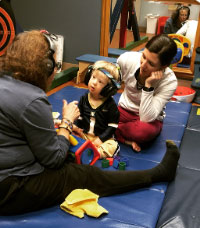 A sound-based intervention designed to support the development of sensory processing, attention, self-regulation, and overall participation in daily activities. To learn more about Therapeutic Listening®, visit the Vital Links website: vitallinks.com.
Interactive Metronome®: A computer-based technology that helps children and adults improve motor planning, sequencing, and timing skills. To learn more about Interactive Metronome®, visit the Interactive Metronome website: Interactivemetronome.com
A sensory-based intervention designed to help children who experience sensory processing challenges and difficulties with sensory modulation. The protocol involves a specialized brushing technique followed by joint compressions, performed under the guidance of a trained occupational therapist.
Citation:
Wilbarger, P., & Wilbarger, J. (1991). Sensory defensiveness in children aged 2–12: An intervention guide for parents and other caretakers. Avanti Educational Programs.
Therapeutic Approaches
Occupational therapy is never one-size-fits-all. Our therapists combine a variety of treatment approaches based on each child’s strengths, goals, and developmental needs.
An occupational therapy approach that helps children process and respond to sensory information more effectively, enabling them to participate successfully in everyday activities. Some children may be over-responsive (hypersensitive) to sensory input. Others may be under-responsive (hyposensitive) and seek out intense sensory experiences. Some children also have difficulty with sensory discrimination, making it challenging to identify objects by touch, manipulate clothing fasteners, use utensils or school tools, or coordinate fine motor tasks. Occupational therapy uses play-based, individualized sensory activities to help children develop self-regulation, body awareness, motor planning, and participation in home, school, and community activities. If your child frequently demonstrates sensory-related challenges that interfere with daily routines, a comprehensive occupational therapy evaluation can help determine whether sensory integration intervention may be beneficial. To learn more about sensory processing, visit the STAR Institute: Sensoryhealth.org. For additional educational resources, explore our Resources page.
A hands-on treatment approach used to improve posture, movement, balance, and coordination in children with motor challenges. Through guided movement and therapeutic handling techniques, occupational therapists help children develop more efficient movement patterns while improving postural control, strength, motor planning, and functional skills. www.ndta.org
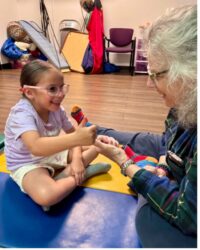 Designed to integrate retained or underdeveloped primitive reflexes that serve as the foundation of the nervous system and our ability to move. Rhythmicmovement.org
Brain Gym® is a movement-based program that uses simple, purposeful activities to support learning, attention, coordination, and overall brain-body integration. The program incorporates coordinated movement patterns designed to improve motor planning, balance, visual tracking, and concentration while promoting readiness for learning. Breakthroughsinternational.org
A movement-based program that combines balance activities, rhythmic movements, and eye-hand coordination exercises to support motor and cognitive development. Using tools such as balance boards, beanbags, and racquetballs, children participate in engaging activities that promote coordination, attention, timing, visual tracking, and motor planning. Bal-a-vis-x.com
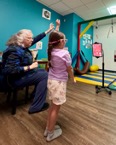 An interactive, technology-based program that combines occupational therapy principles with engaging, game-like activities to support motor, cognitive, and self-regulation skills. Using artificial intelligence (AI), Korro® provides individualized activities and real-time feedback to help children develop fine and gross motor skills, coordination, visual-motor integration, attention, executive functioning, and participation in daily activities. To learn more about Korro®, visit: Korro.ai.